All Categorys

ABB Robot Parts
KUKA Robot Parts
FANUC Robot Parts
YASKAWA Robot Parts

All Small Categorys

ABB Robot Parts
KUKA Robot Parts
FANUC Robot Parts
YASKAWA Robot Parts

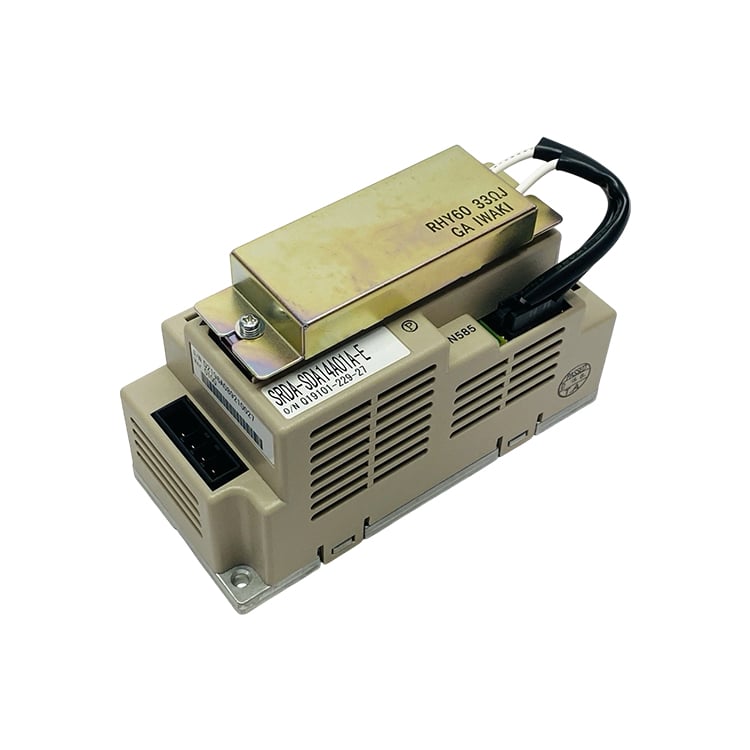
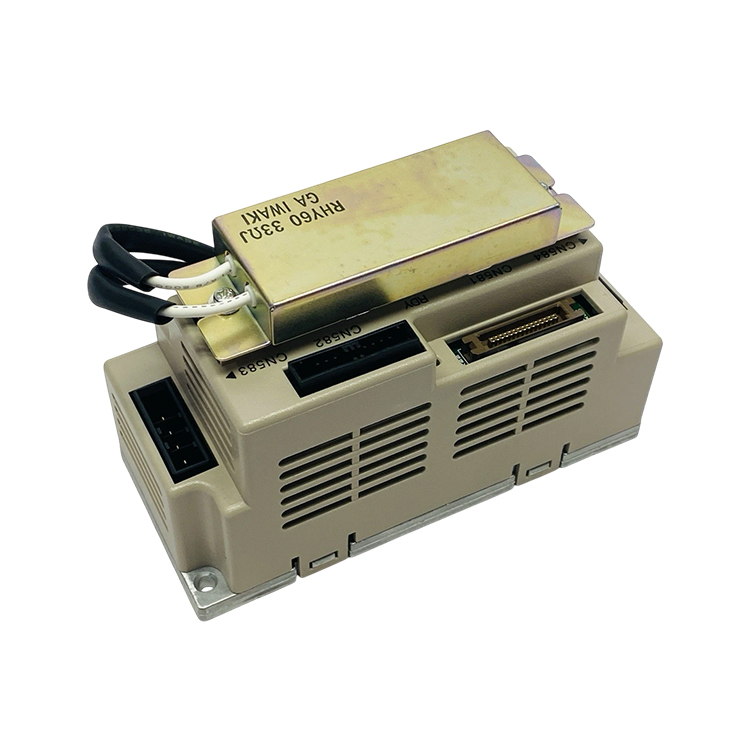
Yaskawa SRDA-SDA14A01A-E Servo Amplifier for Industrial Motors

Product Condition New original or used original. Please confirm the condition with us before ordering.
Shipping Ships from Shanghai, China. Delivery lead time: 3-5 working days. We ship via DHL, FedEx, or UPS with secure packaging.
Buyer Benefits Genuine Yaskawa SRDA-SDA14A01A-E servo amplifier for industrial servomotors, inspected before shipment. Ratings, encoder interface and motor pairing vary by the machine this unit came from, so send us your part number and the motor or machine it was taken from — we confirm the match and the ratings for your unit, then quote. Technical support is available for installation and commissioning questions.
Item Location Shanghai, China.
Payment We accept PayPal, T/T (bank transfer), and Alibaba Trade Assurance.
  • Description
Can’t Find Your Part?

12,000+ parts in stock,Tested before shipping,Reply within 24 hours

Inquiry

Yaskawa Servo Amplifier for Industrial Motion Axes

Specifications

Part Number SRDA-SDA14A01A-E
Brand Yaskawa
Category Servo amplifier (servo drive) — the power stage that drives an industrial servomotor in a closed motion loop.
Function Takes motion commands from the host controller and converts them into controlled motor current, then closes the loop on position, speed and torque using the encoder feedback returning from the motor.
Definition A servo amplifier sits between the motion controller and the servomotor: the controller decides where the axis should go, the amplifier supplies and regulates the current that actually moves it.
How It Differs from a VFD A variable-frequency drive varies the speed of an induction motor for fans, pumps and conveyors. A servo amplifier closes a high-resolution feedback loop around a servomotor, so it controls position and torque, not just speed — the two are not interchangeable.
Motor Pairing Send us the motor model and the machine this amplifier came from — we confirm the amplifier-to-motor pairing for your axis before you order.
Ratings & Interfaces Input voltage, output current, command interface and encoder type are set by the machine this unit was built for. Send us a photo of the nameplate and we read the ratings off your unit and confirm the match.
Supplied With Cables, connectors and mounting hardware depend on the unit we hold. Send us your part number and we confirm what ships with it before you order.
Condition New original or used original. Please confirm the condition with us before ordering.

Industrial Applications

  • Automated assembly lines and special-purpose machines — indexing tables, press-fit stations, screwdriving and dispensing axes that must return to the same position every cycle.
  • Machine tools and metalworking equipment — feed axes, tool changers, turrets and auxiliary positioning drives.
  • Packaging machinery — film feed, cut-to-length, sealing jaws and labelling heads running on short, repeatable cycles.
  • Printing, converting and web-handling equipment — register control and tension axes that must stay synchronized with a running web.
  • Electronics and semiconductor assembly — placement heads, bonders and inspection stages where settling time and resolution decide yield.
  • Robot cells, gantries and pick-and-place units — multi-axis motion where several amplifiers share a command bus.

Design Purpose

A servo amplifier exists to make a motor obey a command precisely. The host controller — a PLC, a motion controller, a CNC or a robot controller — sends a target; the amplifier compares that target against the encoder feedback coming back from the motor and corrects the current it delivers, thousands of times per second. What the machine operator sees as a fast, repeatable, quiet axis is the amplifier holding three variables at once: position, speed and torque.

That is why amplifier selection cannot be done on power rating alone. The command interface the host expects, the encoder protocol the motor speaks, and the motor's own current and voltage requirements all have to line up. Two amplifiers with similar output ratings can still be wrong for each other if the interface variant differs. For this part number the safest route is to match against the unit being replaced: send us the nameplate photo, the motor model and the controller type, and we confirm the replacement before it ships.

Before you order and before you install
  • Match the amplifier to the motor: send us the motor model, its rating and the encoder type, plus the machine this unit came from. We check the pairing and confirm the replacement before you order.
  • Confirm the command interface: servo amplifiers are built for a specific command type — fieldbus, analog or pulse train. Tell us what your controller outputs and we confirm this is the right variant.
  • Power safety: servo amplifiers store energy in the DC bus. Isolate and lock out all supply phases and wait until the charge indicator is out before any wiring, inspection or service. Installation and commissioning must be done by qualified personnel.
  • Back up the parameter set first: parameters live in the unit being replaced. Save them before the swap — losing them means re-tuning the axis from scratch.
  • Plan for commissioning: after installation the axis needs its parameters loaded and auto-tuning run before it goes back into production.
  • Confirm the condition with us: tell us whether you need new or used original before ordering.

Common Failure Modes

  • Overcurrent and short-circuit trips — usually a failed output stage, or a motor cable with damaged insulation or a shorted winding. Check the motor and cable insulation before fitting a replacement, or the new unit will fail the same way.
  • Overtemperature shutdowns — blocked or failed cooling fan, dust-packed heatsink fins, or a cabinet running too hot. Look at the fan and the ventilation path before blaming the amplifier.
  • Ageing DC bus capacitors — bulged tops, a burnt smell, or trips that get more frequent as the unit warms up. This is the most common failure in amplifiers that have run for more than a decade.
  • Encoder and feedback errors — often the cable, the connector or electrical noise rather than the amplifier. Reseat and inspect the encoder cable before replacing the unit.
  • Regeneration faults — an open or overloaded external braking resistor, or a deceleration duty the resistor was never sized for.
  • Control supply faults — blown internal fuses or a failed control power supply; the amplifier is dead with no display and no response.
  • Loose or oxidised terminals — heat discolouration around the power or motor terminals, intermittent trips that change when the cabinet is moved.

Send us the fault code or the symptom your machine reports, along with a photo of the amplifier nameplate, and we confirm the diagnosis and the matching replacement.

Why Choose Us

  • Specialized in industrial robot and motion spare parts for ABB, FANUC, KUKA and Yaskawa.
  • Each unit is inspected before shipment; condition is confirmed with you before you order.
  • We match the part number to your machine before supply — send us the nameplate and motor model and we confirm the pairing rather than shipping on rating alone.
  • Technical support available for installation, parameter backup and commissioning questions.
  • Repair and testing service offered for faulty units.

Related Products

Online Inquiry

If you have any suggestions, please contact us

Contact Us
IT'S SUPPORTED BY

Copyright © SongWei Robotics All Rights Reserved  -  Privacy Policy