
What Is an ABB Paint Robot?
After staying in the factory for a long time, you will find a quite realistic thing - a lot of customers do not worry about the spraying link at the beginning, thinking that it is just spraying a layer of paint, how big a deal can it be. But when it really comes to mass production, the most people often have a headache is the spraying. Machining and then do fine, assembly and then tightly, the final paint once there is hanging, orange peel, color difference, the entire product grade instantly down. Especially automobiles, home appliances shell, 3C pieces of these things, the appearance is the user's first impression, paint a debut, line or not at a glance.
So now more and more factories no longer rely on the master of the craft to bet on the spraying effect, but directly on the robot. In the circle of paint robots, ABB that set of systems, basically can not be around the existence of the industry reputation there.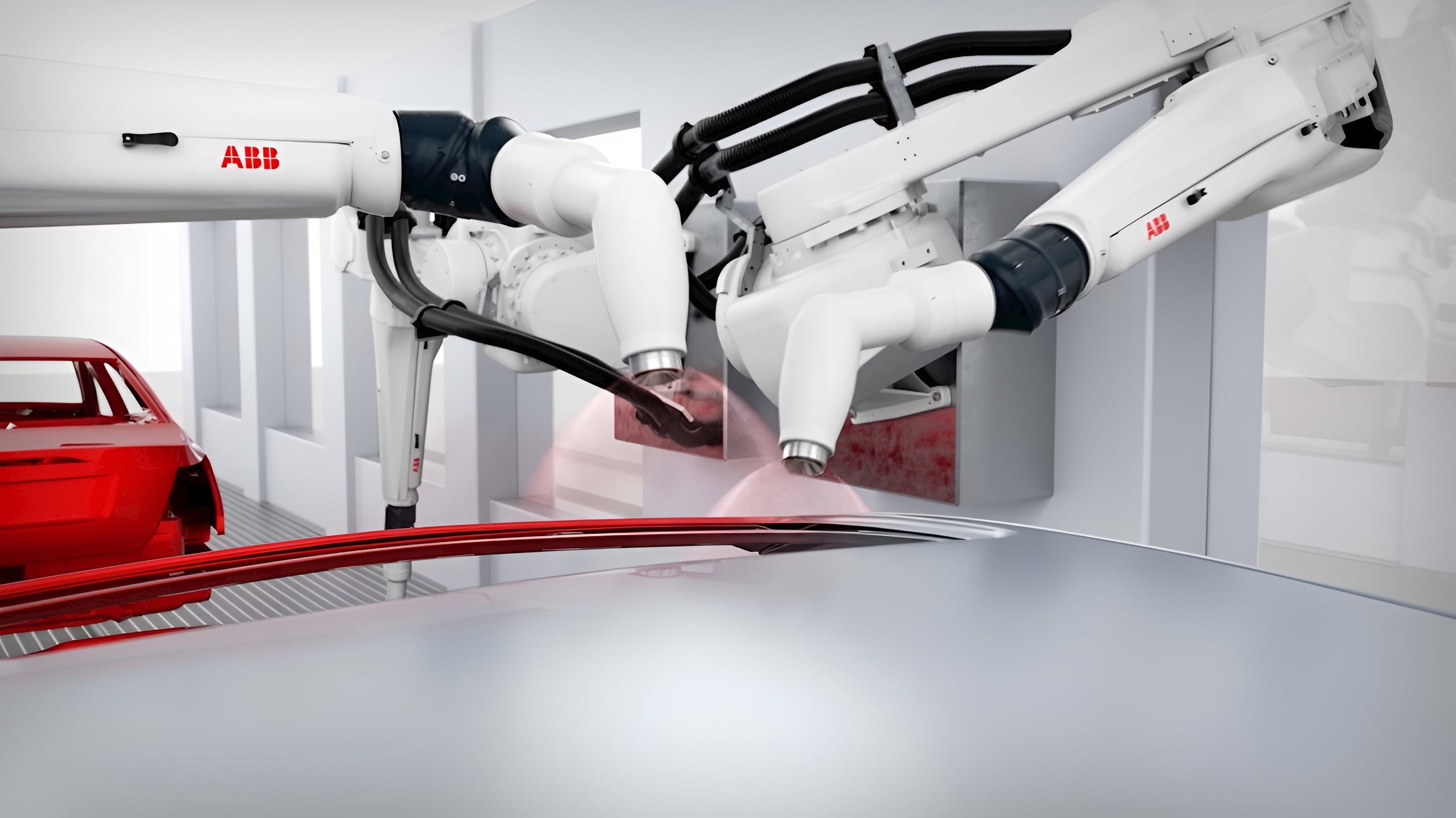
So ABB paint robot in the end is a thing? It is with the ordinary handling, welding robot what is different? In the workshop in the end with what feeling? Today we will talk to you about what we have seen on the front line over the years, and the real experience of using it.
It's more than just a moving arm
Many people see ABB paint robot for the first time, will think that this is not just an ordinary six-axis robot hanging in front of a spray gun. In fact, it's not that simple.
ABB paint robot is more like a packaged complete system. Arm is responsible for taking the track, the atomizer is responsible for the paint to disperse spray evenly, the control system in charge of the flow, voltage, fan these fine work, the software side is responsible for path planning and process logic. It's only when these things come together that it's a whole that works.
In other words, it is not a mechanical arm that only gestures, but a production unit that can control the quality of the paint film in real time. This difference is particularly obvious in the actual production - artificial spraying rely on the master's touch and experience, today's state of good spraying beautiful, tomorrow a hand shake may turn over; robot spraying rely on parameters and repeatability, the first piece of what, the first thousand pieces or what.
How does it work? In layman's terms
You can imagine the whole process is very simple: the workpiece is placed there, the robot circles around it and sprays it while spinning, while constantly fine-tuning the spraying state.
The key lies not in the action of “spraying”, but in the ability to “adjust while spraying”.
For example, if you go to the scene to see, the robot walks to the corner of the workpiece position, the amount of paint will automatically close a little smaller, to prevent the pile of paint; walk to the large plane area, the fan will be widened to improve efficiency; turn, the speed of movement and the amount of paint out of synchronization to ensure that the thickness of the paint film is uniform. All these are not adjusted by twisting the knob next to the human, it is the logic set up in the system in advance that runs by itself.
A few hard things that really decide whether the spraying is good or not
Customers often ask: the same ABB robot, why some factories sprayed out like a mirror, and some are almost meaningless? In fact, the root is not in the robot itself, but in the following a few things.
- Atomizer
This thing is the core of the spraying good or bad. Simply put, its job is to break up the liquid paint into very fine particles. The more uniform the particles, the smoother the spray will be on the surface of the workpiece, and the more even the paint film will be. If the atomizer is not in good condition, you look at the paint surface, either flowers, or small particles, or thick piece of thin piece. Many of the spraying quality problems we see in the maintenance field are related to the atomizer in the end.
- Electrostatic spraying
Many ABB spray systems use electrostatic methods. The principle is not complicated, is to let the paint with an electric charge, the workpiece grounded, the paint particles like a magnet sucked over to the workpiece to run. The actual effect is very intuitive - the paint is more uniform, the edges and corners are better covered, and the paint mist is less scattered. To put it bluntly, it saves paint and is cleaner.
- System integration
ABB stronger place is that it is not simply the spraying equipment “hanging” on the robot, but the pumps, valves, control units are integrated into the system, some directly to the robot near the wrist. The advantage of doing so is a fast response, small delay, change the color of cleaning when the waste paint is also less. The scene with up you will feel the whole spraying action is very with the hand, not the kind of slow half a beat sense of procrastination.
Common Models and Where They Are Used
Let's talk about a few models that we have touched more, not to mention the parameters, but the actual use of the feeling.
ABB IRB 5500 in the automobile factory is basically considered an old acquaintance, characterized by fast action, stable trajectory, especially suitable for body panels such as large areas of spraying.
ABB IRB 5510 is more commonly used in parts coating line, small workpieces, varieties, the beat often change the kind of production line, it adapts to more flexible.
There is also the ABB IRB 52 series, in some general industrial areas can often be seen, belongs to the rugged type.
Why do many factories bite the bullet and also on the paint robot?
In fact, this issue does not need to reason, go to the scene round will understand.
Stability is not a quantum leap. Artificial spray paint, the master today in good condition, out of the work of beautiful; tomorrow the spirit of a little worse, the quality of the paint directly diving. Robot will not be tired, will not mood swings, sprayed out of each thing film thickness, gloss are highly consistent.
Save paint is really save. The robot can control the amount of paint to be particularly accurate, minimize overspray and waste of paint mist. Quite a few projects run down, the money saved on paint alone is quite substantial.
Safety. Spraying environment has solvents, paint mist, people in the long term inside the inhalation, great harm to the body. After the robot goes up, people can basically withdraw to the outside of the spraying area, only to do monitoring and auxiliary work.
A few of the most common problems encountered in the field
And then good equipment, to the workshop for a long time there will always be a problem, the following are often encountered in the field we run.
1. Spray uneven
This is the customer complaints the most, up the first sentence is “the robot is not allowed”. But check down, many times the root is not in the robot, but the atomizer state is not good, the flow is not stable, or the trajectory of the teaching has a little offset. The solution is to check the process end, and then check the mechanical end.
2. Sudden increase in the amount of paint
Customers are particularly sensitive to this. Common reasons include spraying distance is not right, the parameters have been moved, valves or pumps a little trouble. It is not the system suddenly became worse, is a part of the run off did not realize.
3. Robot is moving but not out of paint
Sounds quite outrageous, but in the field is not really rare. Priority check paint pump is not working, the valve is not blocked, the control signal through or not. This type of problem often occurs in the paint supply system, the robot body generally can not take the blame.
4. Some places can not spray
Some areas of the workpiece is always missing spray, usually the path planning problems, either the trajectory teaching is not in place, or the mechanical structure has a little offset. This situation requires re-teaching points, light adjustment parameters can not be solved.
5. Bad electrostatic effect
Many people can not see this at first, but the finished product put together to compare the obvious. Usually the high-voltage system out of condition, or poor grounding. This problem is quite common on old equipment.
Routine maintenance, say a few small habits that can save money
Paint robots are not the kind of equipment that can be repaired when it breaks down, so routine maintenance is especially critical.
A few simple but useful points:
- The atomizer is regularly checked and cleaned, do not wait for the paint clogged and then get.
- Keep the spraying area clean. Paint mist builds up and gets in the way.
- Don't let the cable bend under pressure for a long time, especially the wrist section.
- Be sure to ground it properly, electrostatic spraying depends on it.
- Keep a record of parameter changes, don't adjust it today and forget it tomorrow.
A lot of big problems are actually small problems slowly saved up.

