All Categorys

ABB Robot Parts
KUKA Robot Parts
FANUC Robot Parts
YASKAWA Robot Parts

All Small Categorys

ABB Robot Parts
KUKA Robot Parts
FANUC Robot Parts
YASKAWA Robot Parts

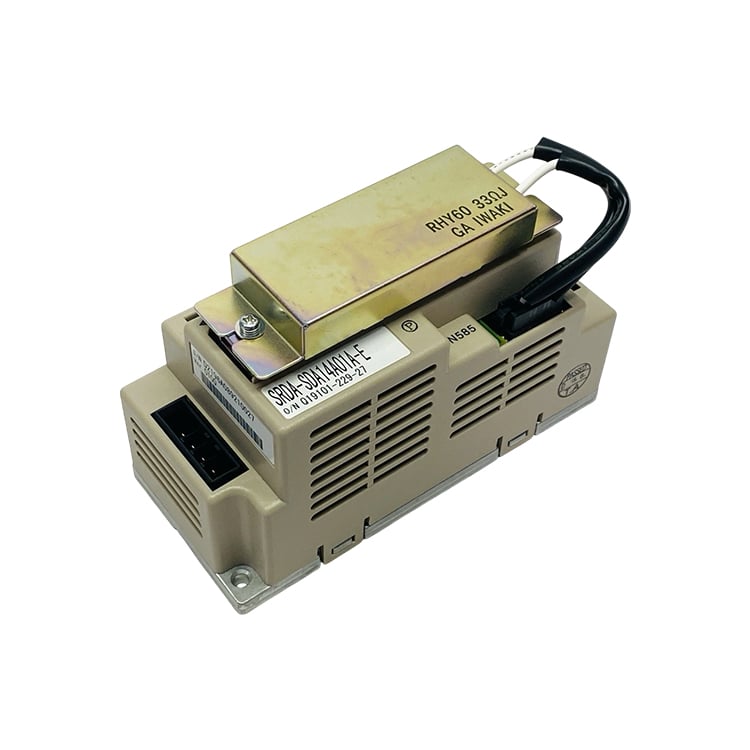
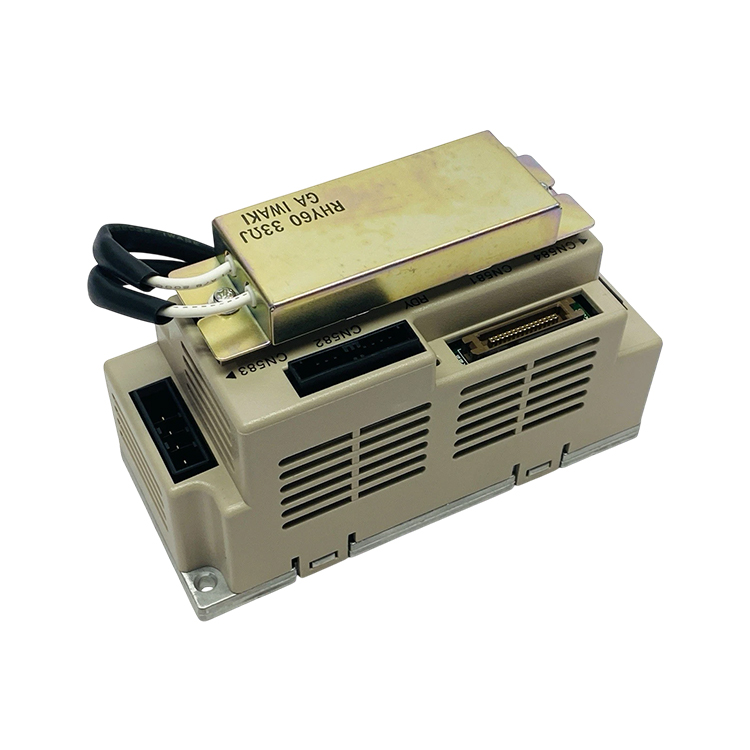
Yaskawa SRDA-SDA14A01A-E Servo Amplifier for Industrial Motors

Product Condition New original or used original. Please confirm the condition with us before ordering.
Shipping Ships from Shanghai, China. Delivery lead time: 3-5 working days. We ship via DHL, FedEx, or UPS with secure packaging.
Buyer Benefits Genuine Yaskawa SRDA-SDA14A01A-E servo amplifier module for Yaskawa robot controllers, inspected before shipment. Output rating, axis assignment and controller generation vary with the cabinet this unit came from, so send us your part number and the robot or controller model — we confirm the match and the ratings for your cabinet, then quote. Technical support is available for installation and commissioning questions.
Item Location Shanghai, China.
Payment We accept PayPal, T/T (bank transfer), and Alibaba Trade Assurance.
  • Description
Can’t Find Your Part?

12,000+ parts in stock,Tested before shipping,Reply within 24 hours

Inquiry

Servo Amplifier Module for Yaskawa Robot Controllers

Specifications

Part Number SRDA-SDA14A01A-E
Brand Yaskawa
Category Servo amplifier module — the drive stage inside a Yaskawa robot controller cabinet that powers the manipulator's axis motors.
Function Takes the motion commands calculated by the robot controller and converts them into controlled current for the manipulator's servomotors, closing the loop on position, speed and torque using the encoder feedback coming back from each axis.
Definition One amplifier module drives one or more robot axes. It sits between the controller's motion board and the motor, and it is the part that actually delivers the power the arm moves with.
Part of a Cabinet Set This module belongs to the SRDA family used inside Yaskawa robot controllers alongside the converter section and the axis control boards. Other units in the same family carry the SRDA-SDA, SRDA-SDB, SRDA-COA and SRDA-EAX prefixes — see the related parts at the end of this page.
Controller Compatibility Send us the controller model and the robot this cabinet runs — we confirm this amplifier belongs to your generation before you order.
Axis & Rating Axis assignment, output rating and encoder interface are set by the cabinet this module was built for. Send us a photo of the nameplate and we read the ratings off your unit and confirm the match.
Supplied With Cables, connectors and mounting hardware depend on the unit we hold. Send us your part number and we confirm what ships with it before you order.
Condition New original or used original. Please confirm the condition with us before ordering.

Industrial Applications

  • Arc and spot welding cells — the axis amplifiers that hold torch position and travel speed through continuous weld duty.
  • Handling, machine tending and press-to-press transfer — high-cycle pick and place where the amplifier absorbs constant acceleration and deceleration.
  • Assembly and screwdriving stations — axes that must return to the same point within a tight window, cycle after cycle.
  • Palletizing and packaging lines — larger manipulators moving mixed payloads, where the drive stage sees a fluctuating load all shift.
  • Painting and coating booths — robots running long, continuous paths inside a controlled booth environment.
  • Grinding, deburring and polishing cells — sustained contact force, which keeps the amplifier under steady load rather than intermittent peaks.

Design Purpose

A robot controller does not drive the arm directly. It calculates where every axis should be, then hands those targets to the amplifier stage. Each amplifier module takes a target, compares it against the encoder feedback returning from its axis, and corrects the current it delivers — position, speed and torque held together, thousands of times a second. What looks like smooth robot motion is this loop closing on every axis at once.

That is why the amplifier inside a robot cabinet is not interchangeable with a general-purpose servo drive from a machine tool or a conveyor. It is specified as part of a cabinet set: the converter section feeding it, the axis control board commanding it, and the motor bolted to the axis it drives all have to belong to the same generation. Two modules with the same physical outline can still be wrong for each other if the cabinet generation differs. For this part number the reliable route is to match against the module being replaced — send us the nameplate photo, the controller model and the robot it drives, and we confirm the replacement before it ships.

Before you order and before you install
  • Match the cabinet generation: send us the controller model and the robot this cabinet runs. We check the amplifier belongs to the same generation before you order rather than matching on the part number alone.
  • Match the axis: amplifier modules in this family are built for specific axis and output classes. Tell us which axis failed and we confirm the correct module for that position.
  • Power safety: the amplifier and the converter section store energy in the DC bus. Isolate and lock out all incoming supply, then wait until the charge indicator is out before any wiring, inspection or module swap. Work inside the cabinet must be done by qualified personnel.
  • Back up before the swap: save the controller's parameter set, including the zero-point and calibration data, before removing the old module. Losing it means re-teaching the robot.
  • Check what else failed: an amplifier that trips on overcurrent often has a damaged motor cable or a failing axis motor behind it. Have the motor and cable checked before fitting the replacement, or the new module will fail the same way.
  • Confirm the condition with us: tell us whether you need new or used original before ordering.

Common Failure Modes

  • Overcurrent and short-circuit trips — a failed output stage, or a motor cable with damaged insulation and a manipulator that drags that cable every cycle. Check the motor and the harness before replacing the module.
  • Overtemperature shutdowns — a failed cabinet fan, dust-packed heatsink fins, or a control cabinet sitting in a hot cell. Robot cabinets run long hours, so cooling degradation shows up here first.
  • Ageing DC bus capacitors — bulged tops, a burnt smell, or trips that get more frequent as the cabinet warms up. The most common failure in controllers that have been in service for more than a decade.
  • Encoder and feedback errors — usually the encoder cable running through the manipulator, a connector, or electrical noise rather than the amplifier. Reseat and inspect the feedback path before swapping the module.
  • Regeneration faults — high-cycle handling robots put a heavy deceleration duty on the bus. An open or undersized resistor shows up as a regeneration trip on fast decelerating axes.
  • Control supply faults — blown internal fuses or a failed control power supply; the module is dead with no response from the controller.
  • Loose or oxidised terminals — heat discolouration around the power or motor terminals; intermittent trips that change when vibration is introduced.

Send us the fault code on the pendant, the axis that reports it, and a photo of the amplifier nameplate — we confirm the diagnosis and the matching module for your cabinet.

Why Choose Us

  • Specialized in industrial robot spare parts for ABB, FANUC, KUKA and Yaskawa.
  • Each unit is inspected before shipment; condition is confirmed with you before you order.
  • We match the part number to your controller generation and axis before supply — send us the nameplate and controller model and we confirm the fit rather than shipping on the code alone.
  • Technical support available for module replacement, parameter backup and recovery after the swap.
  • Repair and testing service offered for faulty modules.

Related Products

Online Inquiry

If you have any suggestions, please contact us

Contact Us
IT'S SUPPORTED BY

Copyright © SongWei Robotics All Rights Reserved  -  Privacy Policy