

What Is an ABB Robot Gearbox?
Folks usually talk about industrial robots, mouth and mouth are how to adjust the controller, how to program, how to go track, these visible and tangible things. But really soak in the workshop for a long time you understand, a robot moving up quasi-disallowed, smooth or not, the root of the thing is actually its mechanical body bones. The most important and easily overlooked part of this body is the gearbox.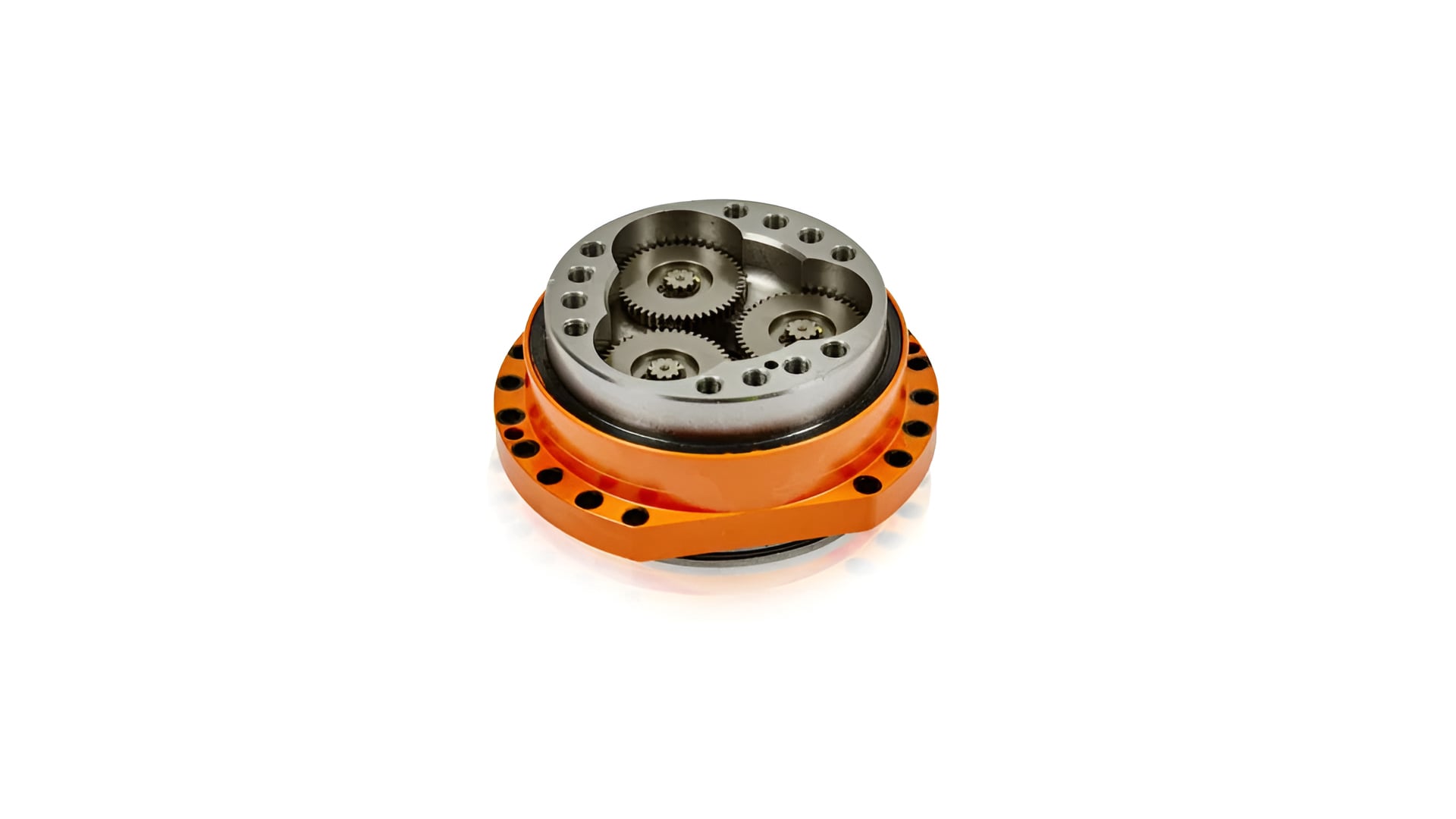
What does this thing do in a robot?
Let's use a very crude analogy. The motor spins like crazy, whoosh, but if you want it to directly carry a hundred or eighty pounds of welding tongs or fixtures, it does not have the strength, simply can not carry. On the other hand, when the robot is working to be that kind of steady strength, the action does not have to be how fast, but it must have the strength, and the stopping position must be accurate to as fine as a hair.
These two needs are completely screwed. Gearbox is in the middle of this “translation” and “conversion” of the work - the motor of that stupid fast stupid fast speed down, while the strength to amplify, but also to ensure that the transfer of The motor's power has to be transmitted to the right position. Without it, the motor is directly connected to the arms and legs, and the robot will either jerk around or completely collapse.
If you have disassembled an ABB robot and run down the arm, it is found in the big joint at the base, in the place where the big arm and the two arms are connected, and in the small joints of the wrist that can be turned around. The big joints and the small joints are not the same thing, the big joints want to be sturdy and durable, can carry a big beam, the small joints want to be zero clearance, hand accurate.
Several types of gearboxs are commonly used in the workshop.
One kind of gearbox is called RV gearbox, and some people call it cycloid pinwheel. This thing is a solid head, generally squatting in the base and arm of the kind of large force place. Characterized by resistance to manufacturing, rigidity enough, you let the robot every day swinging a sledgehammer like handling, spot welding that kind of heavy work, it can carry.
The other is called harmonic gearbox, the road is completely different. It has a flexible wheel inside, relying on elastic deformation to drive, so the gap can be almost zero, high precision, but also small. You go to see the robot wrist those sections, dexterous as a human hand, where most of it is it. Dry assembly, grab small parts of the fine work, all rely on it that hand accuracy.
There is also a planetary gearbox, a compromise choice, compact efficiency is also good, in some cost-sensitive or precision requirements are not so demanding auxiliary axis can be seen.
If the gearbox starts to lose its temper, the robot won't do its job.
There are a lot of things that happen on the shop floor that end up in the wrong place.
For example, the robot's accuracy goes down as it goes along. In the past, it used to put the pieces in a tight fit, but now it is always a little bit off, adjusting the program, recalibrating the zero point have tried or not. In this case, it is likely that the clearance in the gearhead has been enlarged. There is a gap between the gears, and when you tell it to go to that position, it wobbles a bit, and the actual difference goes out.
Another thing is that the robot moves in a lurch, and it looks shaky to the naked eye, and it's not as smooth as it used to be. This is mostly due to uneven wear inside, or the lubricant is not working, dry grinding.
The original robot work quietly, now clicking, buzzing, like a pot. This sound is it is screaming for help, the bearings or gears inside must have something to deal with.
There are more direct, previously able to move the portion, now on the alarm, feel the robot is not strong. This means that the transmission efficiency has dropped a lot, and the energy is consumed in the gearbox.
The most common scenarios in the field
Come on, let me tell you a few scenarios that you must be familiar with. The customer calls and says: “My robot, the point that used to be right is now all off, not more than a hair off, annoying a person.” Many people's first reaction is to lose the program or hit the gun, in fact, the probability is that the gearbox gap is too large. Another is the oil leakage, the joints under the hanging oil droplets, the ground blotch a puddle. This is most likely that the oil seal aging, long time oil leakage is gone, the inside dry grinding, minor problems dragged into a major repair. There is also feel the joints rolling hot, much hotter than normal, either the load is too large or lubrication failure, the inside of the fight it.
So when should I change my gearbox?
A lot of bosses can't afford to do that, so they're thinking of holding on to it for a little while longer. But to be honest, the precision has dropped significantly, the shaking can be felt by the hand, the noise is so big that the people next to them turn their heads to look, the oil leakage can not be stopped, the temperature is abnormally high, these five signals as long as accounted for two, don't carry on. Further delay, in case the gear fragments fall out of the motor or encoder to sweep, then the maintenance cost is not a gearbox price.
Is the gearbox used in our robots the same as the one used in ordinary equipment?
It's not the same thing. The gearbox of the ordinary equipment, a little gap does not matter, almost can turn on it. Robots can't do that. If the gap is a little bit bigger, the deviation of the tool head will be enlarged to a few millimeters. That's why the backlash requirement for a robot gearbox is very low, and the repeatability must be stabilized throughout the life cycle, so there's no room for ambiguity on this point.

